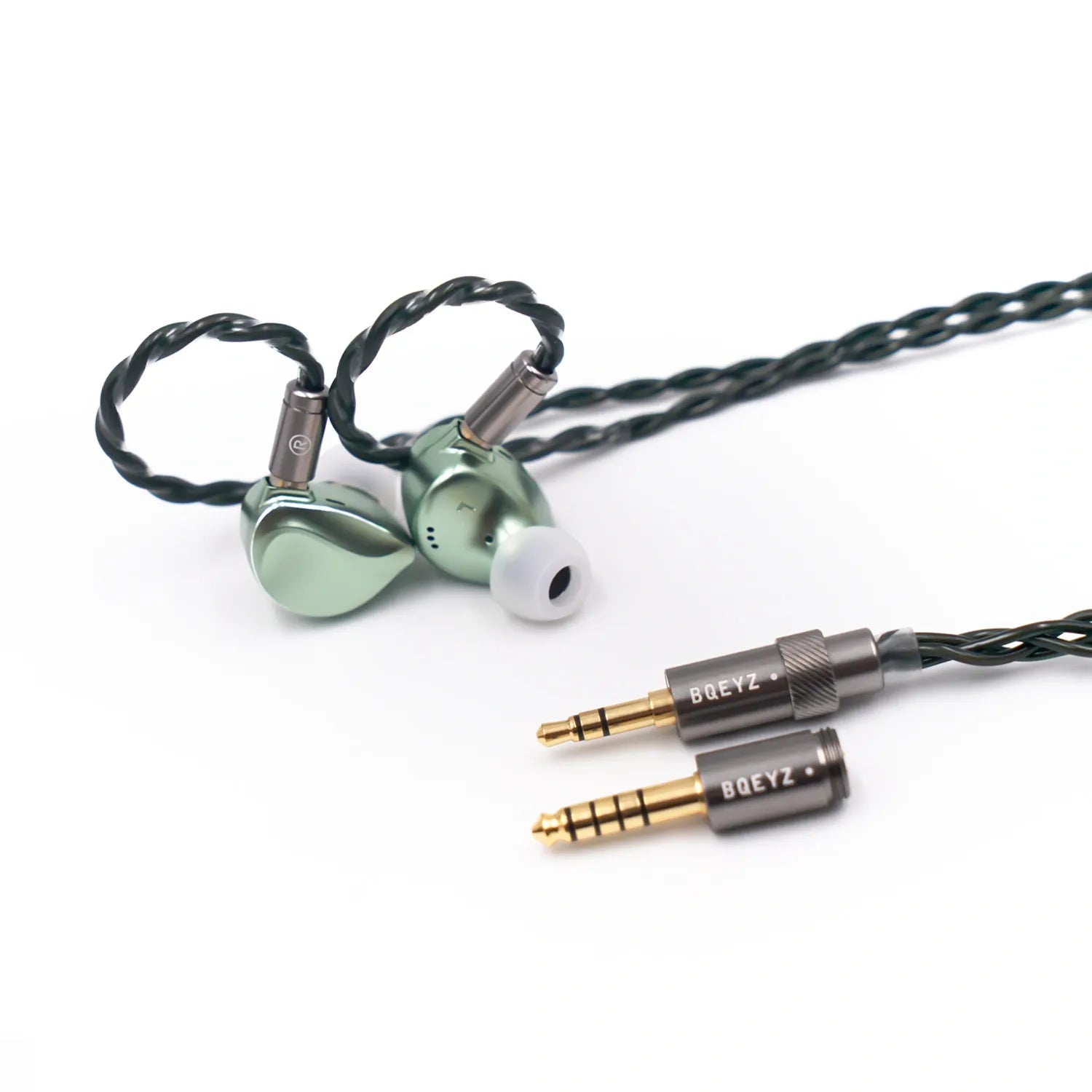
If you've spent any time browsing in-ear monitor (IEM) forums lately, you've probably seen the term "bone conduction" attached to earphones that still look like regular wired IEMs — not the open-ear sport headphones the term usually brings to mind. That's a different, newer technology, and it's changing what a "complete" sound signature can mean in a single earpiece.
Here's what bone conduction actually does inside an IEM, why it matters, and how to figure out if it's right for your ears.
Bone Conduction Isn't New — Using It Inside an IEM Is
Bone conduction technology has existed for years in swim headphones and open-ear sport earbuds, where a transducer rests against your cheekbone or temple and sends vibrations through bone straight to your inner ear, skipping the eardrum entirely.
What's newer is combining that same principle with a traditional dynamic driver inside a sealed IEM shell. Instead of replacing the eardrum-based listening experience, the bone conduction unit works alongside a conventional driver — one handles the vibration-based frequencies, the other handles standard air-conducted sound. The result is a hybrid signal your ear perceives as a single, unified sound.
How a Bone Conduction Driver Works Inside an IEM
A typical bone conduction IEM uses a piezoelectric (PZT) ceramic transducer mounted against the part of the shell that contacts your ear. When an audio signal passes through it, the ceramic element flexes at extremely high speed, and those vibrations transfer through the shell into your ear canal and surrounding bone structure.
Paired with a dynamic driver for the rest of the frequency range, this setup can do a few things a single dynamic driver alone struggles with:
- Extend bass texture and sub-bass presence without needing a larger, heavier driver
- Add a distinct sense of separation and "3D" spatial layering, since two different physical mechanisms are producing sound simultaneously
- Reduce driver flex distortion at high output levels, since the workload is split across two transducer types
What Does It Actually Sound Like?
This is the part specs can't fully explain, and it's also the most debated part of bone conduction IEMs online. Reviewers of BQEYZ's Winter series and Wind consistently describe a few recurring traits:
- A wider, more holographic soundstage than typical single-DD or hybrid IEMs at a similar price
- Noticeably tighter, more textured bass rather than bloated or boomy low end
- A sense of note separation that makes busy mixes feel less congested
Some listeners also report a very slight "edge" or metallic quality on certain tracks at first listen — something that's tuning- and tip-dependent, and often smooths out with the right eartip seal (silicone tip choice makes a bigger difference on bone conduction IEMs than on conventional ones, since seal quality affects how vibration transfers to your ear).
Bone Conduction vs. Standard Dynamic Driver IEMs
| Standard Dynamic Driver | Bone Conduction Hybrid | |
|---|---|---|
| Sound delivery | Air conduction through eardrum | Air conduction + bone vibration |
| Bass character | Driver-size dependent | Often tighter, more textured |
| Soundstage | Standard | Wider, more layered |
| Fit sensitivity | Moderate | Higher — seal quality matters more |
| Best for | General listening | Listeners chasing space, separation, and sub-bass texture |
Neither is objectively "better" — it's a different mechanism that changes how certain frequencies reach your ear, and different tunings will suit different music genres and listener preferences.
Which BQEYZ IEM Should You Try First?
If bone conduction has your curiosity, here's how BQEYZ's current lineup breaks down:
- Winter2 — the current-generation bone conduction flagship, refined for a smoother, more natural top end than earlier revisions.
- Winter Ultra — the higher-tier version for listeners who want maximum bass authority and are willing to experiment with eartips (many reviewers pair it with wide-bore tips like DUNU S&S for the best coupling).
- Wind — a hybrid dynamic driver + bone conduction design in a different tuning direction, positioned as a warmer, more musical alternative to Winter2.
If you're new to the technology, start by reading a few real-world impressions in our BQEYZ IEM Reviews Collection — it's updated regularly with listener reviews across the whole lineup, including Winter2, Winter Ultra, Frost, Wind, and BQ-10.
Getting the Best Results From a Bone Conduction IEM
A few quick tips if you pick one up:
- Try multiple eartip sizes and materials before judging the tuning — seal directly affects bone conduction coupling.
- Give it 20–30 hours of listening before forming a final opinion; many listeners report the "edge" some reviews mention softens in with wear and tip adjustment.
- A/B against a standard dynamic driver IEM you already know well — the soundstage and bass texture differences are usually more obvious in direct comparison than in isolation.
Have questions about which BQEYZ model fits your listening style? Contact us — we're happy to help you find the right fit.
Share:
2025 Ultimate Guide: Best Wired Earphones for Music, Running, Gaming & Budget Audiophiles